
 Cloud & AI Infrastructure
 Dev Ops Live
 Cyber Security World
 Big Data & AI World
 Data Centre World
Exhibitor Press Releases
248kW Air-Liquid Hybrid Load Cabinet: Empowering Full-Lifecycle Data Center Testing and Validation for a Leading Domestic Service Provider
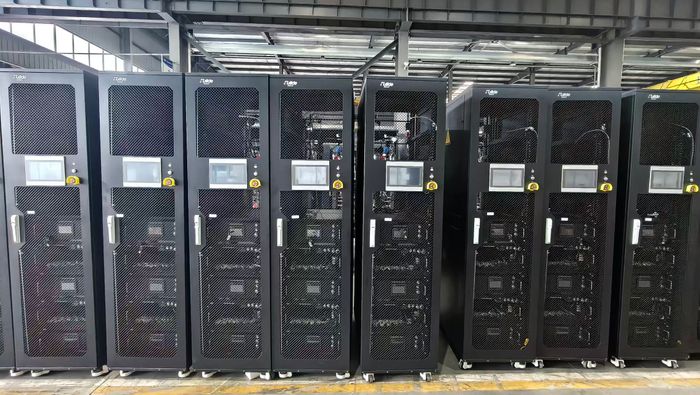
A leading domestic provider of full‑lifecycle data center solutions—offering end‑to‑end services from planning and design through construction, commissioning, and operational optimization for top internet enterprises, financial institutions, and government agencies—required a high‑precision heat source emulation system capable of simultaneously simulating both air‑cooled and liquid‑cooled thermal profiles for multiple new data center projects. The system was needed for rack‑level thermal validation, liquid cooling loop commissioning, and power supply load testing. Following a thorough technical evaluation, the customer selected the 248kW air‑liquid hybrid load cabinet independently developed by Guangdong Fullde Electronics Co., Ltd. as the core tool in its data center testing and validation framework.
Solution Positioning
Within the full‑lifecycle management system of data centers, this 248kW hybrid load cabinet plays a central role as a “rack‑level heat source simulation and validation platform.” By precisely emulating the real‑world thermal loads of high‑density IT racks under various operating conditions, it provides “pre‑deployment validation and go‑live stability” engineering assurance for both construction delivery and operational optimization. The cabinet adopts a standard rack form factor and integrates both air‑cooled and liquid‑cooled load modules, faithfully reproducing the heat dissipation characteristics of AI servers and high‑density compute nodes. This effectively mitigates risks of hot spots, power overloads, or cooling failures after compute equipment deployment due to infrastructure design flaws.
Technical Capabilities Breakdown
Air‑Liquid Dual‑Mode Hybrid Architecture for Realistic Deployment Scenarios
The load cabinet features a modular design, integrating multiple air‑cooled and liquid‑cooled load units, each with independently adjustable power output. The total maximum load capacity reaches several hundred kilowatts, enabling simultaneous simulation of both cooling modes and supporting thermal testing for cold‑plate liquid cooling architectures. All load units can be flexibly combined or used independently based on test requirements, with easy assembly and disassembly. Whether for UPS and generator load testing during the construction phase, or for evaluating cooling system performance during operation, the system offers high adaptability. It is compatible with standard three‑phase power supplies, supports mainstream AC frequencies, and delivers load accuracy that meets stringent engineering validation standards for data centers.
High‑Precision Monitoring of Liquid Cooling Parameters for Comprehensive Operational Insight
The cabinet is equipped with high‑precision electrical parameter measuring instruments and a liquid cooling data acquisition system, capable of real‑time monitoring of voltage, current, power, and other critical electrical parameters, while also accurately collecting liquid‑side data including inlet/outlet temperatures, differential pressure, and flow rate. The liquid cooling section is designed with a typical mid‑range supply water temperature, with return water temperature adjustable according to test conditions, and a maximum temperature tolerance reaching a fairly high level. The operating pressure range covers common liquid cooling system requirements with ample safety margins. Both single‑module and total system flow rates are carefully calculated to meet the thermal simulation demands of high‑density racks. Sensor accuracy across temperature, pressure, and flow measurements meets industrial instrumentation standards. Piping is constructed from corrosion‑resistant stainless steel, and sealing materials are high‑quality synthetic rubber, ensuring long‑term corrosion resistance and sealing reliability. This design enables test engineers to fully monitor equipment performance under extreme loads, providing solid data support for cooling system optimization and power supply reliability validation.
Dual‑Mode Local and Remote Control for Multi‑Scenario Test Requirements
The system supports both local and remote control modes. In local mode, a touchscreen enables gear selection and load application, while the panel displays real‑time operational status, electrical parameters, cooling parameters, and fault conditions. In remote mode, the host software allows manual load step‑up/down and automated program‑controlled loading. Each load unit is equipped with standard industrial communication interfaces. The host software visualizes key parameters including voltage, current, power, water pressure, differential pressure, water temperature, temperature difference, and flow rate, and incorporates data logging and alarm functions.
Comprehensive Safety Protection Mechanisms for Sustained Reliable Operation
High‑power‑density testing demands robust stability and safety. The cabinet is equipped with a full suite of protective features: the air‑cooled section includes overtemperature automatic protection, fan fault protection, and grounding protection; the liquid‑cooled section includes low‑flow protection, overtemperature alarm, leak detection, heater over‑temperature protection, and pressure anomaly protection. All protection mechanisms are accompanied by audible and visual alarms, ensuring prompt response to any abnormality during extended full‑load operation, thereby safeguarding both the equipment under test and test personnel.
Application Value Dimensions
Value 1: Precise Validation During Construction to Reduce Deployment Risks
During the data center construction and delivery phase, the load cabinet simulates server heat output to validate the performance of air‑cooled aisles, cold plates, and CDUs against design targets. By completing full‑condition verification of the cooling systems before actual servers are installed, the solution helps the service provider identify and rectify piping design flaws and thermal bottlenecks in advance, effectively eliminating hot‑spot risks caused by inadequate cooling after compute equipment deployment and ensuring on‑time, high‑quality project delivery.
Value 2: Ongoing Operational Testing to Support Energy Efficiency Optimization
The system delivers highly stable heat output, suitable for testing the response of chiller plants, cooling towers, and energy recovery systems in data centers. By collecting real‑time temperature differential and flow data, it generates energy efficiency analysis reports that assist the service provider in precisely evaluating cooling system effectiveness and power consumption. This capability provides a reliable data foundation for optimizing data center PUE (Power Usage Effectiveness), supporting the service provider’s green and low‑carbon operational goals for its clients.
Value 3: Integrated Air‑Liquid Dual Mode Reduces Equipment Investment and Maintenance Costs
Traditional test approaches often require separate equipment for air‑cooled and liquid‑cooled systems, increasing procurement costs and consuming valuable floor space. This load cabinet integrates both cooling modes into a single enclosure, allowing one system to meet the testing requirements for both thermal architectures, significantly reducing capital investment and space occupancy. The modular design also simplifies subsequent maintenance and upgrades.
Commitment from Fullde
Guangdong Fullde Electronics Co., Ltd., founded in 2006, is a national high‑tech enterprise and a recognized “Specialized and Sophisticated” SME leader, dedicated to the independent R&D and manufacturing of high‑power intelligent load testing systems. The company operates an academician workstation and a post‑doctoral research team, has filed over 600 patents, and serves critical sectors including data centers, ultra‑high‑voltage power transmission, smart grids, rail transit, and new energy. In the field of data center thermal management testing, Fullde has built a comprehensive product portfolio covering air‑cooled, liquid‑cooled, and air‑liquid hybrid technologies. The company is committed to providing full‑lifecycle service providers with end‑to‑end support—from solution design and manufacturing to on‑site commissioning and after‑sales service—helping customers achieve precise testing and reliable delivery as data centers evolve toward higher density and intelligence.